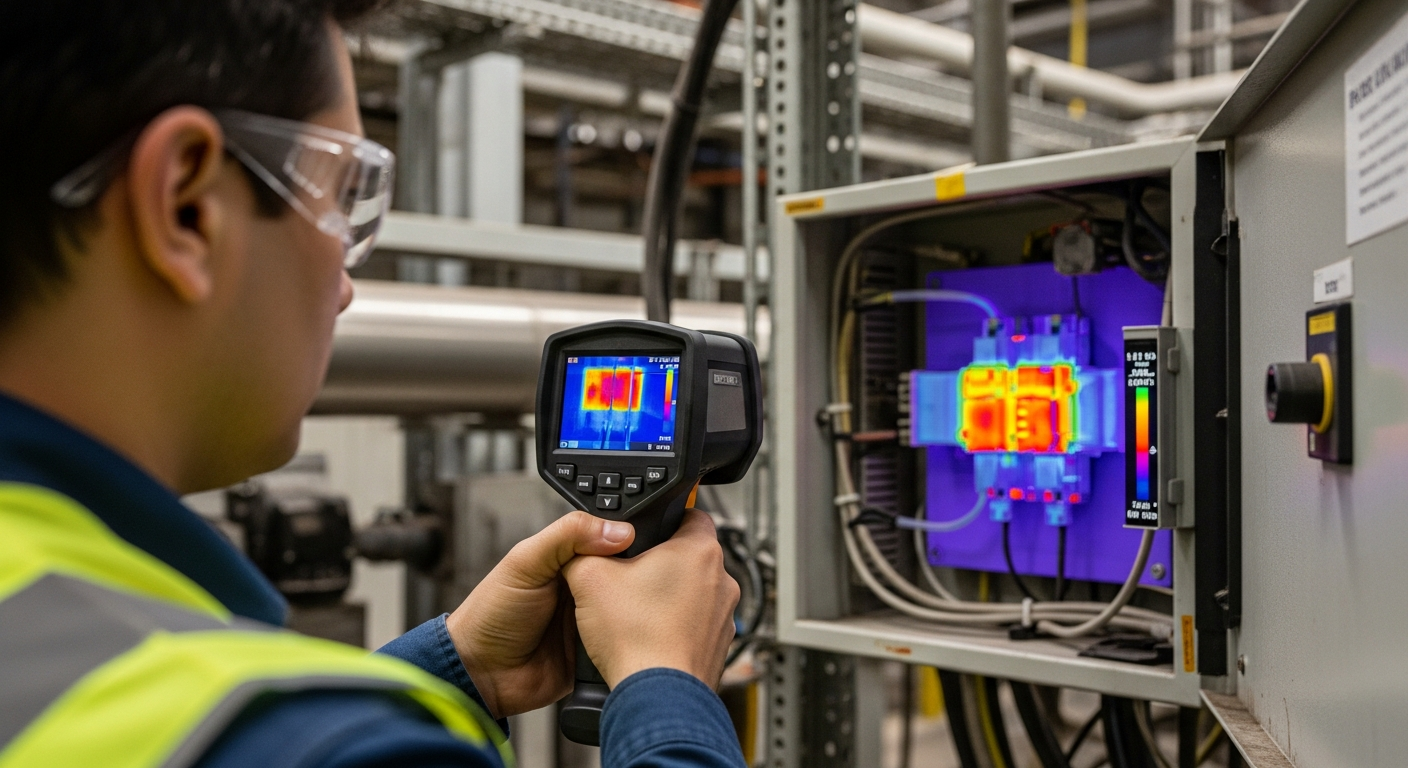
Most electrical failures announce themselves long before they happen — through heat. Infrared (IR) thermography lets trained technicians see that heat, identify problems while equipment is still energized, and fix them on your schedule instead of during an unplanned shutdown.
How It Works An infrared camera detects the heat radiating from electrical components. A healthy connection runs cool and even. A failing one runs hot. By scanning equipment under normal load, a technician can spot abnormalities that are invisible to the naked eye.
What Thermography Finds Loose or corroded connections that increase resistance and generate heat Overloaded circuits carrying more current than they should Imbalanced loads across phases Failing breakers, fuses, and switches Deteriorating insulation and components Why It Belongs in Your Maintenance Program It Is Non-Invasive Scans happen while equipment runs under normal load.
There is no shutdown, no disruption, and the inspection captures real operating conditions.